
Dina DiMaggio, MD, FAAP
Read the full article at https://www.healthychildren.org/English/safety-prevention/on-the-go/
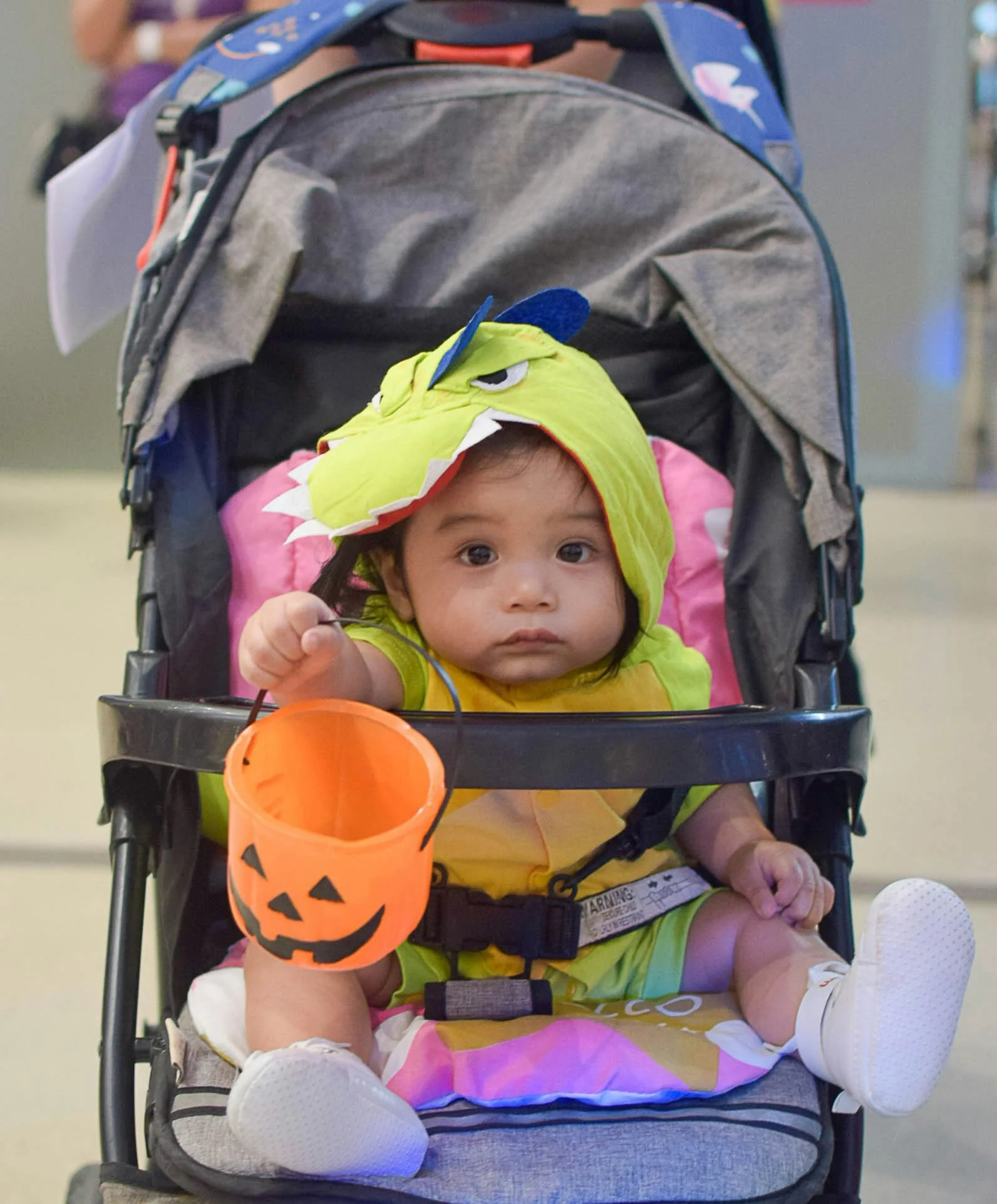
If you are celebrating your little one's first, second, or third Halloween this year, it is important to know how to make the night safe and fun for even the tiniest monsters! Here are some tips to consider:
1. Allow for plenty of time to fright-prep.
As a parent, you know your child best. Keep a look out for fears and anxieties about Halloween. The best way to handle fear and get a toddler ready is to discuss what's going to happen.
Reading books to your child about trick-or-treating—and Halloween in general—are great ways to help that discussion. Halloween parades, events at the zoo or botanical gardens, pumpkin festivals and activities at children’s museums are other fun options to help small children get into the Halloween spirit. You might even want to have your child practice dressing up in their costume before the big day. Toddlers need to know that Halloween is just for fun and the scary stuff is all pretend.
If your little one doesn't want to participate in Halloween, then let that be OK. There is always next year, and 12 months can make a big difference!
2. Play with pumpkins.
Allowing your baby or toddler to squish their hands around the insides of a pumpkin you've carved can be a great sensory play activity. There are also plenty of no-carve pumpkin decorating options to try.
3. Go trick-or-treating before dark.
Infants and young children thrive on routine, and it is easy for Halloween festivities to throw those routines off-track. If your schedule permits, try trick-or-treating while it's still light outside so you can stick to your child's regular bedtime.If your child is sleeping, try putting a "please knock" sign on your door for other trick-or-treaters. If trick-or-treating doesn't start until after dark where you live: Check your local library, recreation center or neighborhood news site for Halloween activities offered earlier in the day.
4. Watch for toddler tripping hazards.
Even on their best days and in the best conditions, it is still a struggle for some toddlers to walk without falling. While you won't be able to prevent all of the tumbles, choosing a costume that is not too long or too bulky will help a great deal.
Avoid costume props like long swords, canes or sticks that can cause accidental injuries, and remember to help your little one climb up and down any steps and porches.
Also make sure that your child can see, breathe, walk and move their arms easily in their costume. If they’re wearing a mask, hat or cape, make sure that they don’t block your child’s face or become a choking risk.
5. Have a "Plan B" costume.
From leaky diapers to spit up to toilet training accidents this age is always reason to pack a backup costume and plan for the unexpected. If potty-training is still a new thing and there's a narrow window between "I have to go" and an accident, you might want to rethink a complicated costume. There is also no harm in putting them in an easy-on, easy-off diaper.
Be sure to check the forecast before you go out and try to include layers if needed. Also remember to help your little one climb up and down any steps and porches.
6. Be ready to pack up early if needed.
A house or costume that's too scary, a trip or a fall, or just a hard day can send your child into the temper-tantrum zone But all is not lost! If your toddler quickly loses interest in trick-or-treating, see if they would prefer to answer the door and hand out candy to all the "big kids" instead. Plus, it can help you reinforce those important sharing skills!
7. Take precautions with added sugar.
Although Halloween and sugar often go hand in hand, the AAP recommends limiting the amounts of sugar kids get each day. This may not be an easy task when most Halloween treats are packed with added sugar and artificial colors your little one doesn't need.
Look out for snacks and treats that may seem "healthier" but still contain added sugars-flavored yogurts and milks, sugary cereals, granola bars, juices and fruit gummy snacks. Other options for trick-or-treating toddlers, or those who choose not to give out candy, include crayons and notepads, stickers, stamps, chalk, bubbles, temporary tattoos, playdough or stuffed animals.
8. Beware of treats that can be a choking hazard.
Keep an eye on what your child has in their mouth at all times while on the trick-or-treat trail—it's so easy to get distracted! It's best to avoid eating while walking or running. Once your child is ready to enjoy treats at home, keep in mind that babies and toddlers should not have any hard candies, caramel apples, popcorn, gum, small candies (jelly beans, etc.), gummy candy, pumpkin seeds or anything with whole nuts. Candy wrappers, stickers, small toys, or temporary tattoos can be a choking hazard as well. As all parents know, babies and toddlers will put just about anything into their mouths!
If your child has a food allergy check every treat before they eat it. When you are not sure what is in a treat, do not give it to your child.
This article is from the http://healthychildren.org, which has much more information about health and safety, parenting, and child development.